
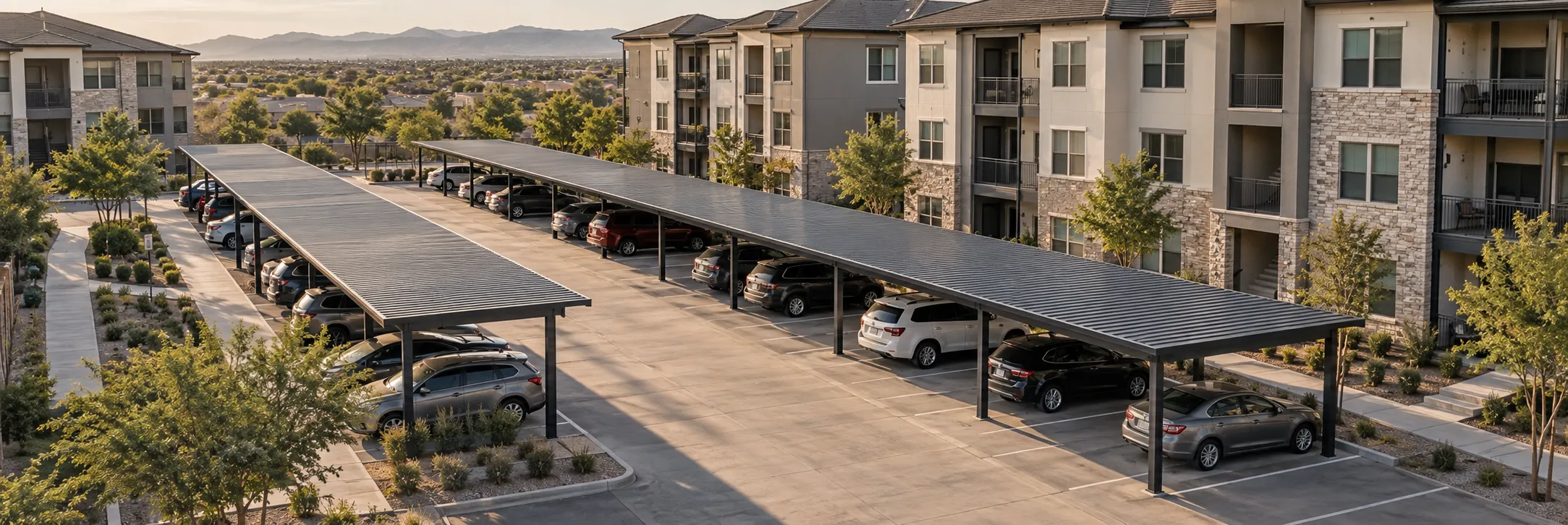
A resident comes home with two bags of groceries after the car has been sitting in the sun all afternoon, and the heat rolls out as soon as the door opens. On a rainy night, that same resident may be holding an umbrella, looking for keys, and trying to keep water from running into the car.
Neither problem is going to change someone’s life, but both are common at apartment properties, and a little shade and cover can make those everyday moments easier. Residents do not need a sales pitch to understand what covered parking does because they can feel the difference when they use it.
For an owner, the value goes beyond giving cars a roof. Covered parking gives the leasing team another option or added feature to offer residents, can make the parking lot feel more planned, and may also create room for solar panels or EV charging later if those uses are considered before the carport is designed.
Shade Makes Daily Parking Easier
Most residents will never think about the frame, roof pitch, or post size when they pull into a covered space, but they will notice the shade.
In hot areas, a roof blocks direct sun from above, which can make getting back into the car a little less miserable after it has been sitting outside for hours. The inside will still get warm, and sunlight can still come through the open sides, but there is a clear difference between a car sitting under a roof and one baking in full sun.
The same is true on rainy days. A carport gives residents some cover while they fold an umbrella, load groceries, put a child into a car seat, or wrestle a stroller into the trunk, and while wind can still push rain under the roof, the extra cover can make a rushed task a lot easier.
Covered Parking Gives Leasing Teams Another Option
Parking often comes up during a tour because people want to know where their car will go, how far they will have to walk, and whether covered spaces are available.
What residents care about can also change over time. Someone who once wanted the closest open space may later care more about shade, having the same space every day, or being able to get a child out of the car without standing in the rain.
A carport is not going to close a lease or earn a renewal on its own because rent, service, location, and the apartment itself matter far more. It simply gives the property one more useful choice, and that can make the overall parking setup feel more complete.
Reserved or Paid Spaces Can Add Choice
Properties can handle covered parking in several ways. Some include a covered space with certain apartments, some assign the spaces at no added cost, and others offer them for a monthly fee.
Any of those approaches can work, but the right one depends on what residents at that property actually care about. A resident who gets home late may care most about knowing exactly where they can park, while someone else may want shade but have no interest in paying more for it, and another person may be perfectly happy with any open space if it keeps their monthly bill lower.
Before an owner builds parking fees into the project budget, the site team should find out whether residents actually want the product being offered. A short survey can tell you a lot, and it also helps to see how nearby apartment properties handle covered or reserved parking.
If the property plans to charge a fee, the rules should be simple and clear. Residents should know what the space costs, which space belongs to them, and what happens when they move, while the lease and local rules may also affect how the program needs to be set up.
Paid covered parking can bring in added income when residents want it, but that income is never guaranteed and every space may not stay full. A careful budget treats that revenue as a possible benefit instead of counting on it before the first car ever parks under the roof.
A Roof Cuts Down on Direct Exposure
Cars at an apartment property may sit outside for hours at a time, where sun, rain, leaves, bird mess, and small pieces of debris can land on them from above.
A carport puts a roof between the vehicle and some of that exposure, which means the car spends less time sitting in direct sun or open rain. The roof can also catch leaves and light debris that would otherwise end up on the hood, windshield, or roof of the car.
There are still limits because a carport has open sides. Wind can carry rain, dust, and debris under the roof, and a strong storm can send material in from several directions, so owners should never promise that a covered space will prevent damage or keep a car clean.
The honest claim is useful enough: a carport reduces some of the sun, rain, and debris that reach a parked car from above.
A Good Layout Can Improve the Look of the Lot
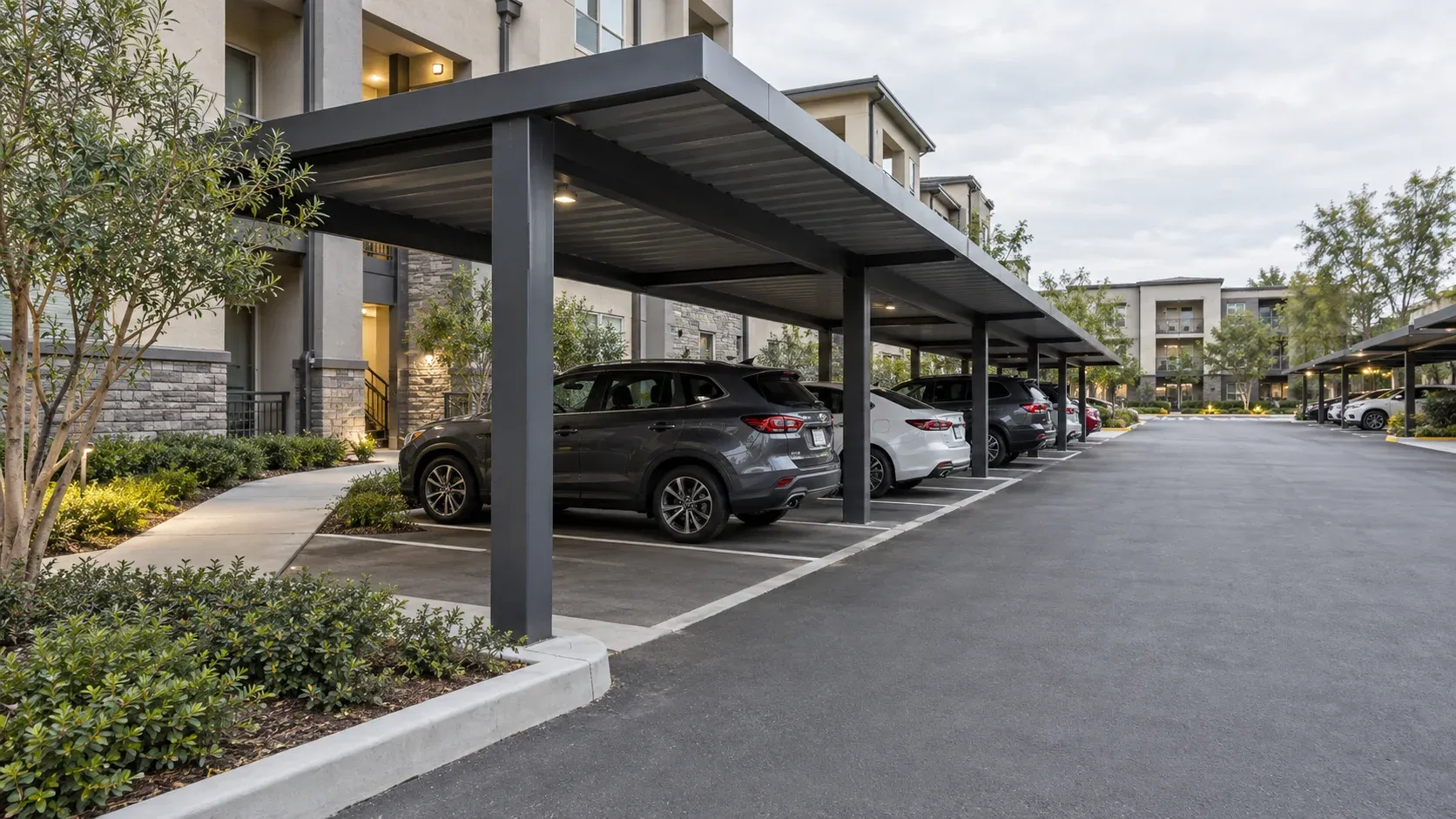
At many apartment properties, the parking lot takes up a large part of what residents and visitors see, and rows of cars, signs, lights, painted lines, and curbs can make the space feel busy.
Carports can bring some order to that view when the roof lines, colors, and materials fit the buildings around them. The covered rows can start to feel like part of the property instead of something dropped into the parking lot, while also making it easy to see where covered parking begins and ends.
That only works if the parking lot still functions well. A roof that is too large can crowd the site, posts in the wrong place can make a turn harder, and poor placement can interfere with drainage, walking paths, or other parts of the property.
The paths, turns, drains, and access needs have to come first. Once those pieces work, the carport design can help tie the parking area back to the rest of the property.
The Roof May Support Future Plans
Some owners look at carports as a first step toward solar panels, EV charging, or both, but a basic shade structure is not automatically ready for those uses.
Solar panels add weight and need wiring that can reach the property’s electrical system, while EV chargers need enough power, safe routes for conduit and cords, and room for electrical equipment near the spaces. Those needs can change the frame, the post layout, the foundations, and the work below the parking lot, so they are much easier to deal with before the carport is designed.
An early review may show that it makes sense to build a stronger frame or install empty conduit for future wiring, even if the solar panels or chargers will not be added for several years. It may also show that the property does not have enough electrical capacity or that the added work costs more than expected, which is still far better to learn before crews start cutting into the lot.
The owner does not need to build every future feature at once. The goal is simply to avoid putting up a carport today that makes the next project harder and more expensive than it needs to be.
Carports Still Have to Fit the Property
Covered parking is easy to like, but an existing apartment site can be difficult to work with because every parking space, turn, walkway, drain, and drive lane already has a job.
Carport posts and foundations need room, underground pipes or wires may already run below the lot, and a new covered row may affect lighting, drainage, fire access, or safe walking paths. Once those needs are mapped out, the final plan may cover fewer spaces than the owner first hoped, and that is much better to learn on paper than after digging has started.
The full cost can also go well beyond the steel frame and roof. A project may need engineering, permits, concrete, lighting, electrical work, pavement repair, drainage changes, striping, or paint, and those items can change the economics of the job quickly.
Even a useful feature can be the wrong project if the cost is too high for the number of residents who are likely to use it. An honest site and cost review gives the owner a better answer than a sales pitch ever could, and that answer may be a full project, a smaller first phase, or a different use for the budget.
Our companion article, What to Plan Before You Build, covers the site, layout, and cost questions that should come next.
Common Questions About Multifamily Carports
Are carports worth adding to an apartment property?
They can be when residents want covered parking and the site can support it at a reasonable cost. The owner should look at likely resident use, the full project cost, and future upkeep before deciding whether the project makes sense.
Can owners charge for covered parking?
Paid covered parking may be an option when the lease and local rules allow it. Owners should test resident demand first, set clear terms, and avoid building the project budget around the idea that every space will stay full.
Can carports be added to an existing parking lot?
Often, yes, but the layout has to work around existing parking spaces, drive lanes, drains, underground utilities, lighting, fire access, and safe walking paths. A site review can show what actually fits before the design goes too far.