
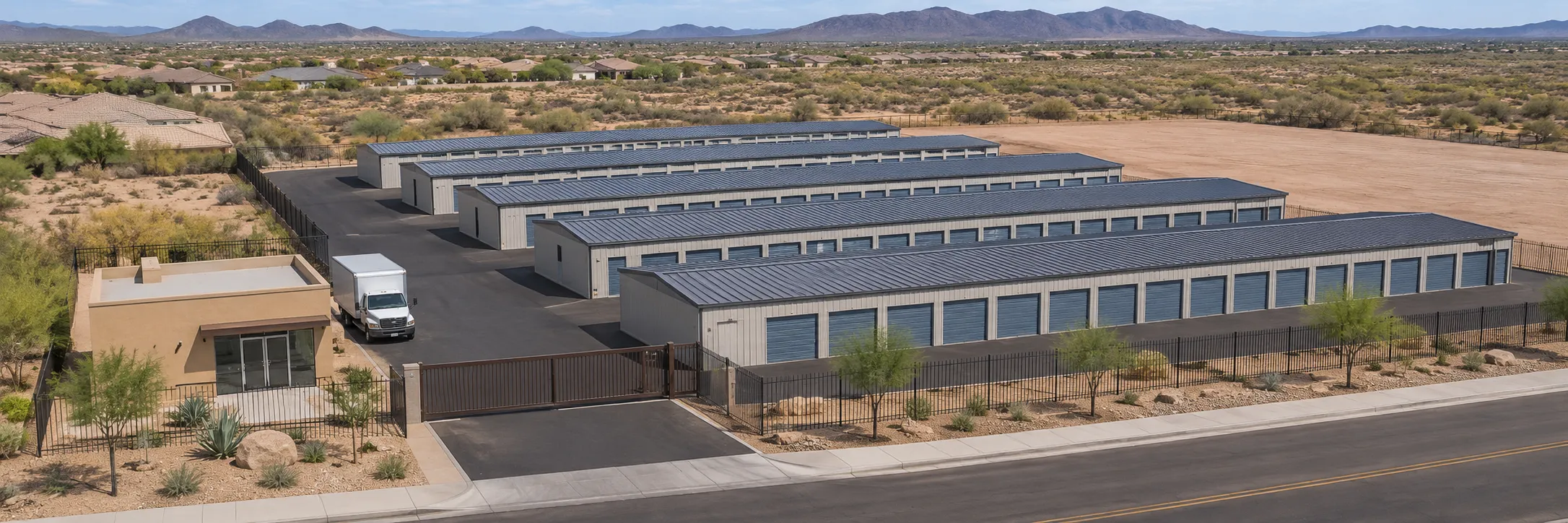
Building a self-storage facility is a series of decisions that get more expensive to change as you go. The market, the land, the unit mix, the building type, and the contractor all lock in parts of the budget. For a first-time developer, the risk is not knowing which questions to ask until a costly answer arrives.
This guide walks through how to build a self-storage facility from the first market review to opening day. It is written for new developers and landowners. It explains what to check, who handles each part, and where owner-side support helps.
Talk with IPG about your first self-storage project
1. Confirm the market before you commit to land
A self-storage project starts with demand, not with a parcel. Before you sign anything, find out:
- Who would rent here? Look at nearby homes, apartments, and businesses within the area customers would drive from.
- What already exists? List nearby facilities, what they offer, and what they charge. Visit or call them as a customer would.
- What is coming? Ask the local planning office about storage projects that are proposed, approved, or under construction. Keep those groups separate.
- What is missing? A market may have plenty of drive-up units but few climate-controlled ones, or no vehicle storage at all.
Lenders and investors often ask for a formal third-party feasibility or market study. That study is worth paying for once a site passes early checks. An early review can save the fee on a site that would fail for other reasons.
2. Check the land before you buy it
A good market can still have the wrong parcel. Work through the questions that can stop or reshape a self-storage project:
| Check | What to find out | Who confirms it |
|---|---|---|
| Zoning | Is self-storage allowed by right, or does it need a special approval or rezoning? | Local planning staff |
| Design rules | Setbacks, height limits, landscaping, screening, and building appearance standards | Planning staff and your architect |
| Access | Can trucks and trailers enter and exit safely? What will the road authority require? | Road authority and civil engineer |
| Utilities | Where power, water, and sewer connect, and who pays for extensions | Utility providers |
| Drainage and flood | Slope, flood zones, and room needed for stormwater detention | Civil engineer |
| Environmental | Past uses or contamination that could create liability | Environmental consultant |
| Title and survey | Easements, access rights, and exact boundaries | Title company and surveyor |
Count usable land, not gross acres. Setbacks, drainage areas, and drive aisles can take a large share of a parcel. A narrow or oddly shaped lot may hold far less rentable space than its size suggests.
IPG’s acquisition and land review helps buyers screen a parcel before deeper diligence and decide whether to pursue, revise, or pass.
3. Plan the facility: unit mix and building type
Once a site looks workable, plan what to build. Two choices shape the rest of the project.
Unit mix
The unit mix is the range of unit sizes and types you will rent. It should come from the market review, not from a template. Consider:
- Small, medium, and large units, and how many of each.
- Climate-controlled versus drive-up units.
- Vehicle, RV, or boat storage, if the market supports it.
- Space held back for a later phase.
Building type
| Building type | Strengths | Trade-offs |
|---|---|---|
| Single-story drive-up | Simple construction; customers park at the door | Uses more land per rentable square foot |
| Multi-story climate-controlled | Fits smaller or pricier parcels; suits climate-controlled demand | Elevators, loading areas, fire protection, and structural cost |
| Conversion of an existing building | Can reuse a structure in an established area | Floor loads, ceiling heights, access, and life-safety upgrades must be checked |
| Mixed site | Combines buildings with covered RV and boat storage | Gates and aisles must serve both cars and long vehicles |
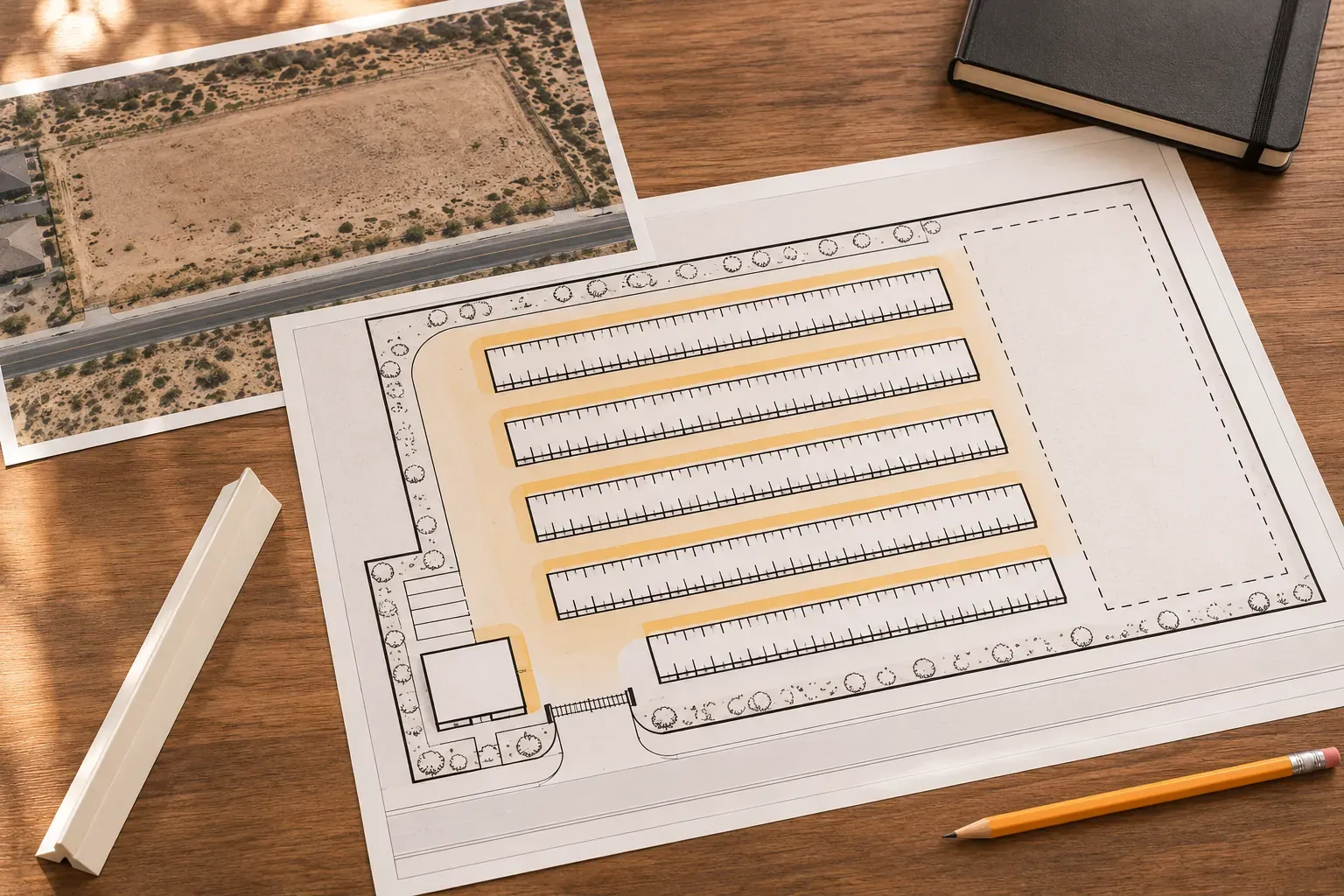
The site layout ties these choices together: building placement, the gate and office location, drive aisles wide enough for moving trucks, and fire access. IPG’s site planning and layout support tests the unit mix against what the parcel can hold. If you plan to add vehicle storage, read our RV storage facility layout guide.
Review your unit mix and site plan with IPG
4. Get approvals and assemble the team
A self-storage project needs several specialists. Know who is responsible for what before work starts:
- Architect: building design, code compliance for the buildings, and permit drawings.
- Civil engineer: grading, drainage, utilities, and site plans.
- Structural engineer: foundations and building structure, often with the building supplier.
- Building supplier: many projects use a pre-engineered metal building package.
- General contractor: builds the project and manages subcontractors.
- Owner-side construction manager or owner’s representative: works for you to organize decisions, compare bids, and track the project.
Approvals can include zoning or site-plan review, building permits, and road or utility permits. Hearings and review cycles often take longer than construction. Plan the schedule around them.
5. Compare bids on the same scope
First-time developers often compare bids by total price. The total is only meaningful when every bidder priced the same work.
A self-storage project usually splits into packages that are easy to leave out of a bid:
- The building package: buildings, doors, partitions, and hallways.
- Site work: grading, utilities, paving, drainage, and fencing.
- Foundations and slabs.
- Gates, access control, cameras, and lighting.
- Fire protection and any elevators.
- Permits, testing, and inspections.
Line up each bid against one scope and ask what is excluded, what is an allowance, and who coordinates the connections between packages. IPG’s construction management services include side-by-side bid comparison for owners.
6. Manage construction and opening
During construction, the owner still makes decisions: answering design questions, approving changes, and handling schedule movement. Keep one current list of open issues and owner decisions so nothing waits on an unanswered question.
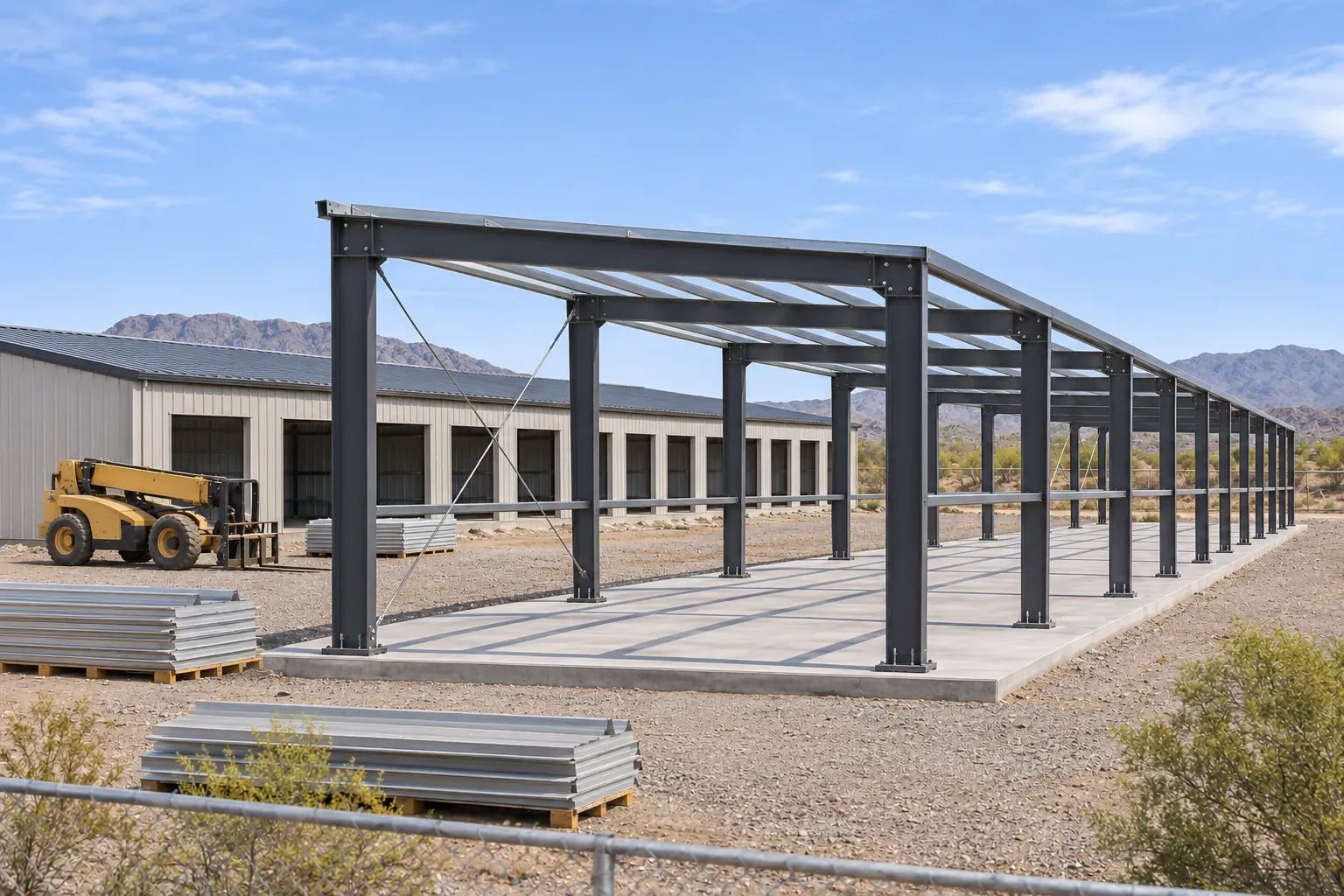
Before opening, confirm:
- Inspections and any certificate of occupancy are complete.
- Punch-list items are tracked to closure.
- Turnover documents, warranties, and equipment manuals are in hand.
- Gates, access control, and cameras work.
- Your operator or management team is ready on day one.
An owner’s representative can carry these items for you if you can’t be on site.
Where IPG fits for first-time developers
IPG works on the owner’s side. It does not sell buildings or hold construction contracts. For first-time self-storage developers, that means help to:
- Screen land and markets before you buy.
- Plan the unit mix, building type, and layout with your design team.
- Compare bids on one scope.
- Track decisions, changes, and closeout through opening.
Read more about IPG’s self-storage development consulting.
Planning your first facility? Send the site, your building concept, and where the project stands. IPG can help you decide what to check next.
Talk with IPG about your self-storage project
Common questions
How long does it take to build a self-storage facility?
It depends far more on approvals, design, and financing than on construction itself. Zoning hearings, permit review, and building-package lead times often set the schedule. Build a realistic timeline only once the site, approvals path, and building type are known.
Do I need a feasibility study before building self-storage?
Lenders and investors often ask for a third-party feasibility or market study. Before paying for one, an early owner-side review can flag zoning, access, supply, or site problems that would make the study unnecessary.
Should a first project be single-story or multi-story?
Single-story drive-up buildings are simpler to build and run but use more land. Multi-story climate-controlled buildings fit smaller, more expensive parcels but add elevators, loading areas, and structural cost. Land price, zoning, and local demand decide which fits.
Who specializes in construction management for self-storage startups?
Look for an owner-side construction manager or owner's representative with self-storage experience, someone who works for you rather than for a contractor or building supplier. IPG provides owner-side planning, bid review, and construction management for first-time self-storage developers as the owner's representative. It does not build the project or act as the contractor.
What should I send IPG first?
The site address or map pin, your target building concept or unit count, budget assumptions, and where the project stands. Partial information is fine for a first conversation.